
The Map Is Not the Territory
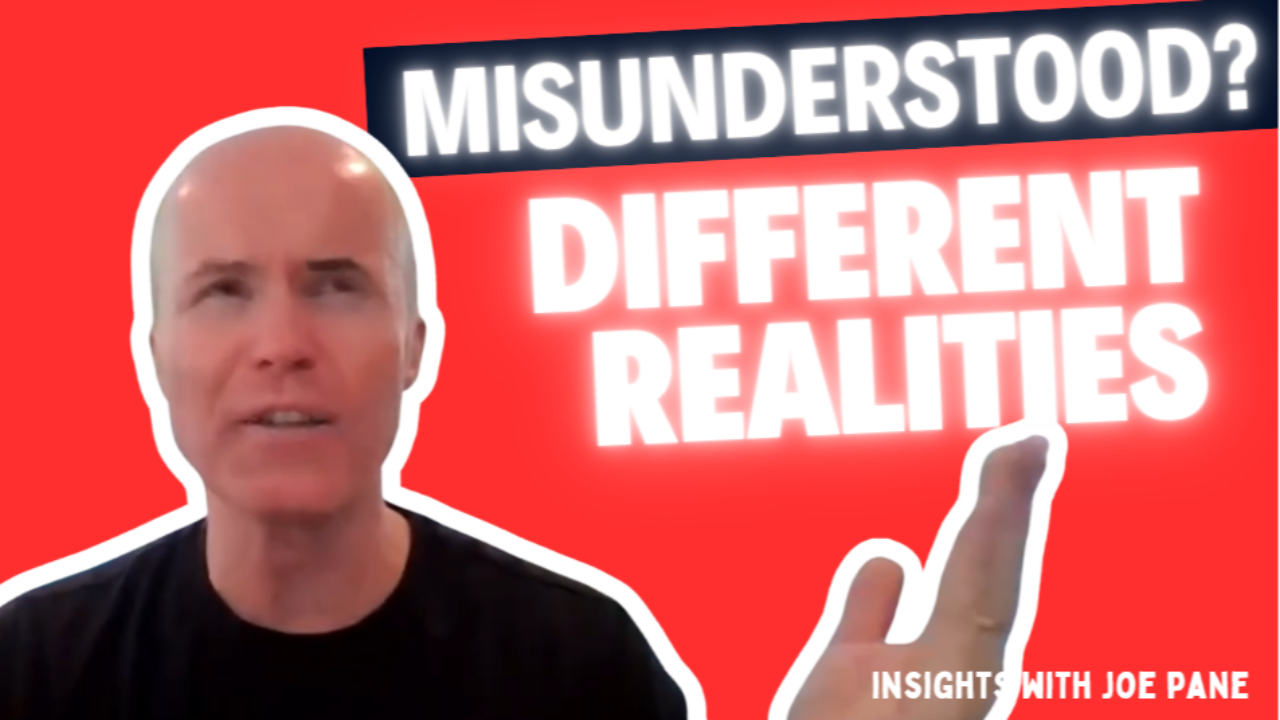
Why understanding perception changes everything in communication and connection.
A simple idea that changes everything
There’s an idea I’ve come back to time and time again, both in my own life and in the work that I do with businesses and individuals. It’s simple, but it’s not always easy to live. And the more you sit with it, the more you begin to realise just how much of your life it actually explains.
The idea is this.
The map is not the territory.
This critical thinking principle was first coined by Alfred Korzybski in his 1933 work called “Science and Sanity.”
Now, at first, that might sound like something philosophical, something abstract. But in my experience, this is one of the most practical principles you can understand when it comes to communication, relationships, and meaningful connection. Because what it points to is something we often miss. We think we’re responding to reality, to what’s actually happening in front of us. But most of the time, we’re not.
We’re responding to our interpretation of it.
We don’t experience life as it is.
Each of us is walking through life with our own internal map, and that map has been shaped over time by everything we’ve lived through. Our experiences, our beliefs, our emotions, the meaning we’ve given to different moments, and even what we’ve learned to focus on or filter out. And without even realising it, we start to treat that map as if it’s reality itself. Not as one version of it, not as a perspective, but as the truth.
And this is where things begin to break down.
Because the person in front of you is not seeing what you’re seeing. They’re seeing what their map allows them to see. They’re interpreting the same moment through a completely different lens, shaped by a completely different life. And until we understand that, we’ll continue to expect people to think, feel, and respond the way we do, and that’s where so much frustration comes from.
Context is key… same place, different experience.
I remember a moment that really brought this home for me. Back in Melbourne, where we used to live, there was this big church building next door. It had been there for well over a hundred years. And in that same space, I experienced two very different moments in my life. My sister’s wedding, and my father’s funeral.
Same place. Same environment. Same physical territory.
But two completely different experiences.
Nothing about the room changed. But everything about how I experienced it did. And that’s the distinction we need to understand. The territory is constant, but the map is personal. It shifts based on what we’re feeling, what we’re thinking, and what we’re carrying with us in that moment. And when you really see that, it changes how you begin to understand both yourself and others.
Why we can speak clearly and still be misunderstood…
This doesn’t just show up in big life moments. It shows up in everyday conversations, often in ways we don’t even notice. Have you ever explained something clearly and still felt misunderstood? Not because you didn’t articulate it well, but because the other person responded in a way that made you feel like they missed the point entirely.
Often, the issue isn’t the words themselves. It’s the meaning attached to them.
Take something as simple as the word “intense.” I’ve used this example many times in my workshops, and every time I do, it highlights the same thing. For some people, intense means stress, pressure, something heavy. For others, it means excitement, energy, and being fully engaged. Same word, same sentence, completely different interpretations.
So when someone says, “I’ve had an intense day,” the response they receive might feel completely off. Not because the other person isn’t listening, but because they’re listening through a different map. And this is happening all the time. We think we’re sharing meaning, but often we’re just sharing language and assuming it means the same thing to everyone.
Let’s shift away from the golden rule…
Most of us were raised with the golden rule, to treat others as we would like to be treated. And it’s a good principle. It gives us a foundation for respect and care. But over time, what I’ve come to see is that it has its limitations, because it assumes that others experience the world the same way we do.
A more effective principle is this.
Treat others as they want to be treated.
And that requires something different from us. It requires us to step outside our own map and become genuinely curious about someone else’s. It asks us to pause long enough to consider that their experience of this moment may be completely different to ours, and that if we want to truly connect, we need to understand that difference.
Because connection doesn’t come from being right.
It comes from being willing to understand.
A simple way to begin understanding others.
Now, when you look at the world, there are billions of different maps. Every individual has their own unique way of interpreting life. But at a foundational level, there are patterns that can help us begin to make sense of this complexity.
In the world of behavioural profiling, we often talk about four core ways people tend to engage with the world. Some people are very outcome-driven, focused on results, direction, and getting things done. Others are energised by people, by interaction, by connection, and they bring that energy into the environments they’re in. Some are more grounded in stability, valuing trust, consistency, and depth in relationships, often listening more than they speak. And others are more analytical, thoughtful, and detail-oriented, taking time to process and understand before they respond.
Now, this is not about putting people into boxes. It’s about creating a starting point for awareness. Because the truth is, each of us is a unique combination of these patterns, and that combination can shift depending on the environment we’re in and what’s being asked of us.
When you begin to see this, you start to see people differently.
Most conflict is a clash of maps…
One of the most powerful shifts that comes from understanding this is how you begin to view conflict. Because what you start to realise is that most conflict isn’t really about the situation itself. It’s about a clash of maps.
Different interpretations of the same moment. Different meanings being applied. Different internal realities meeting in the same space. And each person is convinced that what they’re seeing is the truth.
But it’s not.
It’s their version of it.
And when you really understand that, something softens. You take things less personally. You become more patient. You start listening not just to what is being said, but to what it means for the person saying it.
Your map is always evolving.
There’s another layer to this that’s important to recognise. Your map is not fixed. It’s constantly evolving. It shifts depending on how you’re feeling, what’s been happening in your life, where your attention is, and the meaning you’re giving to things in real time.
Which means even you don’t experience the same moment the same way twice.
And that’s powerful, because it reminds us that our experience of life is not set. It’s shaped. And if it’s shaped, it can also be reshaped. The way we see things is not permanent. It’s flexible, and that gives us more agency than we often realise.
What if there’s a different way to approach connection?
So perhaps the real invitation here is this.
Instead of focusing on being understood, what would it look like to focus on understanding?
To slow things down just enough to become curious. To ask yourself, “What might this mean for them?” To listen a little more deeply, beyond the words, into the meaning behind them.
Because the moment you begin to understand someone’s map, communication becomes clearer, connection becomes easier, and influence becomes something that flows more naturally, rather than something you have to force.
Some reflection points…
Without meaningful connection, what do we really have?
Not just with others, but with ourselves.
Because this work doesn’t just apply outwardly. It applies inwardly too. Understanding your own map, becoming aware of how you interpret things, how you respond, how your perception shapes your experience, that’s where self-awareness begins.
So just take a moment and sit with this.
Where in your life might you be mistaking your map for the territory?
And what might change if you became just a little more curious about someone else’s?
Stay connected with news and updates!
Join our mailing list to receive the latest news, VIP invites to events and updates from our team.
Don't worry, your information will not be shared.
We hate SPAM. We will never sell your information, for any reason.